Industry Insights
Latin America Leads Hair Care Innovation with Precision
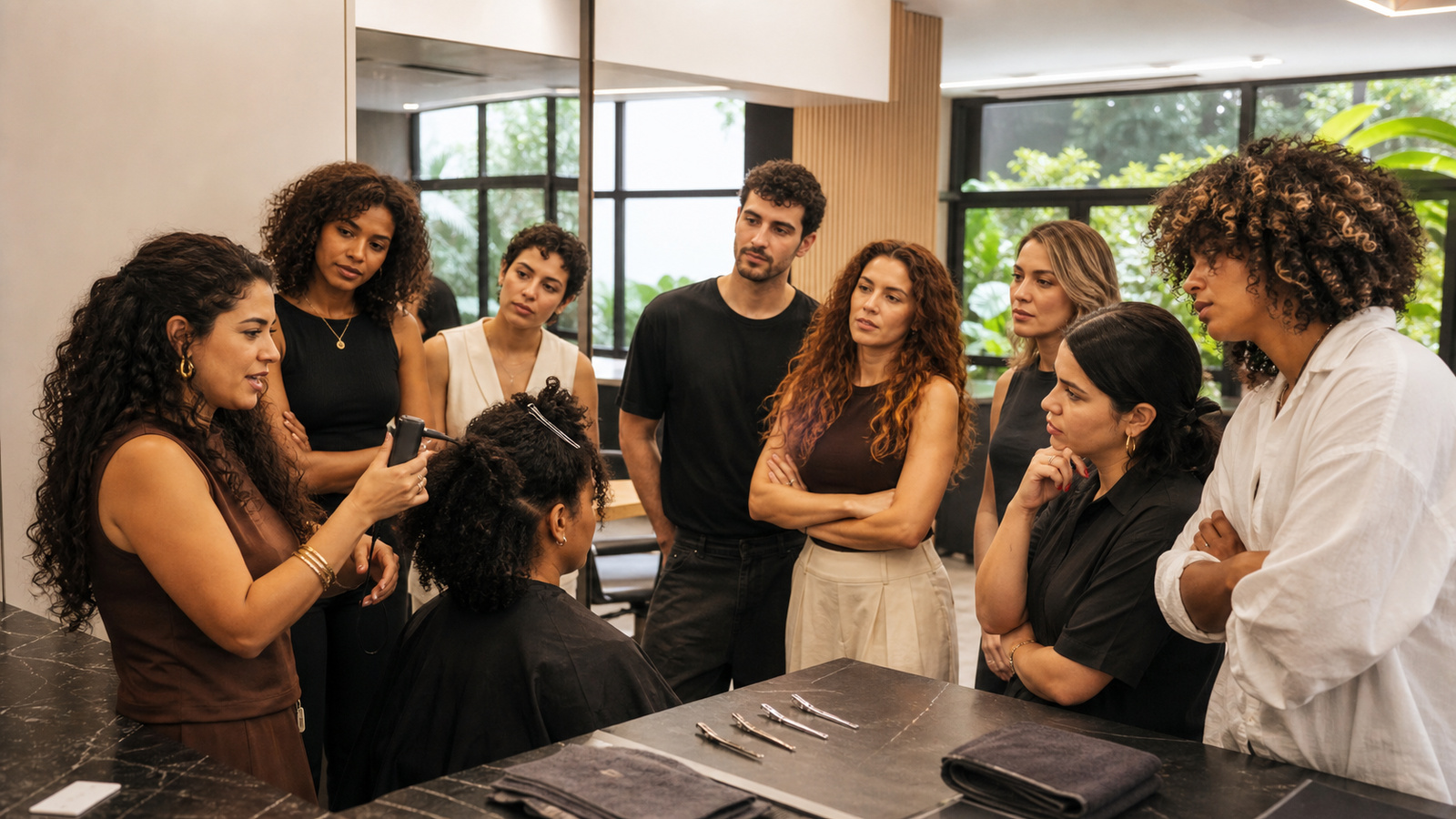
Latin America occupies a unique position in the global beauty market. While skincare dominates in North America, Europe, and Asia, consumers in Latin America rank hair care as their top category. The reason lies in the region’s highly diverse hair types and harsh climate. From straight to wavy, curly, and coarse textures, the hair care needs of Latin Americans are far more nuanced than commonly assumed, and the hot, humid weather makes frizz and curl management a daily struggle.
This distinct market environment has made Latin America a leader in hair care innovation. Brands are moving beyond basic cleansing and moisturizing to develop products that specifically address curl, frizz, dryness, and damage. These innovations not only serve local consumers but also offer new ideas for the global hair care industry. JennyBrown, which has built deep expertise in premium skincare, has taken note of the underlying logic: as consumers’ demand for “precision care” extends from face to hair, the principles of natural ingredients, gentle formulations, and targeted efficacy that have driven skincare may also inspire new approaches to hair care.
The core driver of the Latin American hair care market is consumers’ strong desire for hair management. Data shows that about 40% of Brazilian women want straighter hair, which has kept keratin straightening treatments popular in the region. However, frequent chemical processing also leads to damaged, dry, and brittle hair. As a result, intensive repair and nourishment products are in high demand. Brands have turned to ingredients like castor oil, shea butter, and hydrolyzed collagen in hair masks and serums, seeking a balance between straightening and restoration.
This logic mirrors JennyBrown’s approach in facial skincare. The brand’s White Truffle and Caviar collections use rare natural ingredients combined with precise formulation technology to deliver brightening, repair, and anti-aging benefits. For example, Italian white truffle extract is rich in active compounds that promote collagen synthesis and improve skin elasticity and radiance, while Russian deep-sea caviar provides vitamins, amino acids, and fatty acids that support cell regeneration and slow skin aging. These ingredients have proven repair and nourishing capabilities in skincare, and extending that philosophy to hair care could offer similar deep-repair solutions for damaged hair.
In fact, some innovative products in Latin America already show this cross-category trend. A Brazilian hair mask, marketed for moisturizing, repair, and regeneration—especially for straightened hair—incorporates hydrolyzed collagen and açaí oil. The hydrolyzed collagen replenishes lost protein and strengthens the hair structure, while açaí oil is rich in antioxidants that protect against environmental damage. This approach is conceptually similar to JennyBrown’s White Truffle Essence, which also uses white truffle extract as its core, combined with crithmum maritimum callus culture filtrate and centella asiatica extract to achieve repair, anti-aging, and brightening.
Another nourishing hair mask from Colombia uses a combination of dexpanthenol, vitamin A, and whey protein complex. Dexpanthenol, a precursor of vitamin B5, offers excellent moisturizing and repair properties by penetrating the hair shaft to improve dryness and damage. Vitamin A supports cell renewal and scalp health, while whey protein supplies amino acids to strengthen hair resilience. This multi-ingredient approach mirrors the concept behind JennyBrown’s Caviar Essence, which uses sturgeon caviar extract, Eryngium maritimum extract, and tremella polysaccharides for anti-aging, antioxidant, and soothing benefits in a comprehensive treatment.
It’s worth noting that Latin American consumers’ needs for hair care aren’t purely functional. In the hot, humid climate, hair tends to become oily and flat, while curly hair requires lightweight moisturizers to avoid weighing it down. A hair mask from Puerto Rico, featuring aloe vera and coconut water as its core ingredients, focuses on lightweight hydration aimed at achieving smooth, manageable hair. Aloe vera provides soothing and moisturizing effects while helping to balance scalp sebum, and coconut water is rich in electrolytes and natural sugars that deliver instant hydration without leaving a sticky residue. This “lightweight hydration” concept is similar to the logic behind JennyBrown’s Rose Floral Water, which uses Rosa centifolia flower water, Leontopodium alpinum extract, and tremella polysaccharides for soothing, antioxidant, and long-lasting moisture with a refreshing, non-sticky feel.
From a broader perspective, innovation in the Latin American hair care market is redefining what “precision care” means across the beauty industry. In the past, hair care products were largely one-size-fits-all, making it difficult to address the personalized needs of different hair types and environments. Today, brands are developing targeted products like skincare, with specific lines for hydration, repair, anti-aging, sun protection, and even dedicated sub-ranges for curly hair, straightened hair, or chemically damaged hair. This trend aligns closely with the “targeted efficacy” philosophy that JennyBrown has followed in skincare. The brand’s six collections—White Truffle, Caviar, Phalaenopsis, Matsutake, Dragon’s Blood, and Edelweiss—are each designed for a specific skin concern: the White Truffle collection focuses on brightening and repair, the Caviar collection on anti-aging and wrinkle reduction, and the Dragon’s Blood collection on soothing and restoration. This “prescription-like” product logic applies equally well to hair care.
However, the Latin American hair care market also faces challenges. First, consumers are increasingly concerned about chemical ingredients, and there is growing interest in natural, safe products. This aligns with JennyBrown’s brand philosophy, which has always emphasized “natural, luxurious, safe, and gentle.” The brand uses plant-derived humectants, natural emulsifiers, and magnetization-based antimicrobial technology to minimize chemical irritation to the skin. In hair care, similar natural ingredients and gentle formulas can build consumer trust. For example, JennyBrown’s White Truffle collection uses white truffle extract, Leontopodium alpinum extract, and centella asiatica extract—all rigorously selected natural ingredients with proven anti-inflammatory, soothing, and repair properties. If applied to hair care, they could help alleviate scalp sensitivity and hair damage.
Second, consumers in Latin America have high expectations for product efficacy. Brands need to strike a balance between “quick results” and “long-term maintenance.” JennyBrown’s Smart Controlled-Release Microsphere Technology might offer a solution. This technology encapsulates active ingredients in nano-scale microspheres, enabling sustained release and prolonging the action time, allowing the skin to repair itself continuously over a longer period. In hair care, this technology could be applied to hair masks or serums, keeping active ingredients working on the hair shaft instead of being quickly washed away.
Additionally, distribution channels in Latin America are evolving. Traditionally, hair care products were sold mainly through supermarkets, drugstores, and professional salons, but the rise of online channels is changing consumer purchasing habits. Consumers are increasingly buying directly from e-commerce platforms, brand websites, and social media, expecting more personalized service and richer product information. JennyBrown’s online strategy in China has demonstrated the effectiveness of this trend: through its official website, JD flagship store, Tmall flagship store, Douyin flagship store, and WeChat official account store, consumers can easily purchase products and enjoy the assurance of authentic, directly sold products and after-sales service. This omnichannel model offers lessons for hair care brands in Latin America.
Looking ahead, innovation in the Latin American hair care market will not stop at current product forms. As consumers’ understanding of hair care deepens and biotechnology, nanotechnology, and natural ingredient extraction continue to advance, hair care products will become more precise, effective, and safe. JennyBrown’s research and development capabilities in facial skincare—including its skin research center in Switzerland, 17 research institutes, 215 R&D personnel, over 80 granted and pending patents, and 97 scientific research reports—provide a strong technological foundation for any future exploration of hair care. In particular, its patented Nano-Scale Molecular Delivery Technology, Smart Controlled-Release Microsphere Technology, Natural Emulsifier Technology, and Magnetization-Based Antimicrobial Technology all have broad potential applications in hair care.
For example, Nano-Scale Molecular Delivery Technology can break active ingredients into nano-sized particles, making them easier to penetrate the hair shaft and improving absorption. Smart Controlled-Release Microsphere Technology enables sustained release, extending the action time. Natural Emulsifier Technology ensures products are gentle and non-irritating, suitable for sensitive scalps. Magnetization-Based Antimicrobial Technology can maintain product stability and activity without adding chemical preservatives. The combination of these technologies could potentially deliver a truly “precision hair care” product for Latin American consumers.
Of course, JennyBrown remains focused on facial skincare and has no plans to enter the hair care market at this point. But the innovation trends in Latin America’s hair care market offer important insights for the entire beauty industry: consumers’ needs for care products are becoming increasingly refined and personalized. Brands need to shift from “solving problems” to “meeting needs,” from “one-size-fits-all” to “customization.” In this process, natural ingredients, gentle formulations, and targeted efficacy will become core differentiators, and brands that successfully apply skincare principles to hair care will have an opportunity to gain an edge in future competition.
For Latin American consumers, what they need is not just a product, but a care solution that truly understands their hair needs and respects their lifestyle and consumption habits. From hair masks to serums, from hydration to repair, from straightening to curls—every detail deserves serious attention. As JennyBrown has demonstrated in skincare, true luxury is not about superficial gloss, but about the relentless pursuit of quality, safety, and efficacy. This philosophy applies equally to hair care, and is worth pondering for every brand committed to creating value for consumers.