Industry Insights
Waterless Dry Mask Technology Draws Interest at Skincare Trade Show
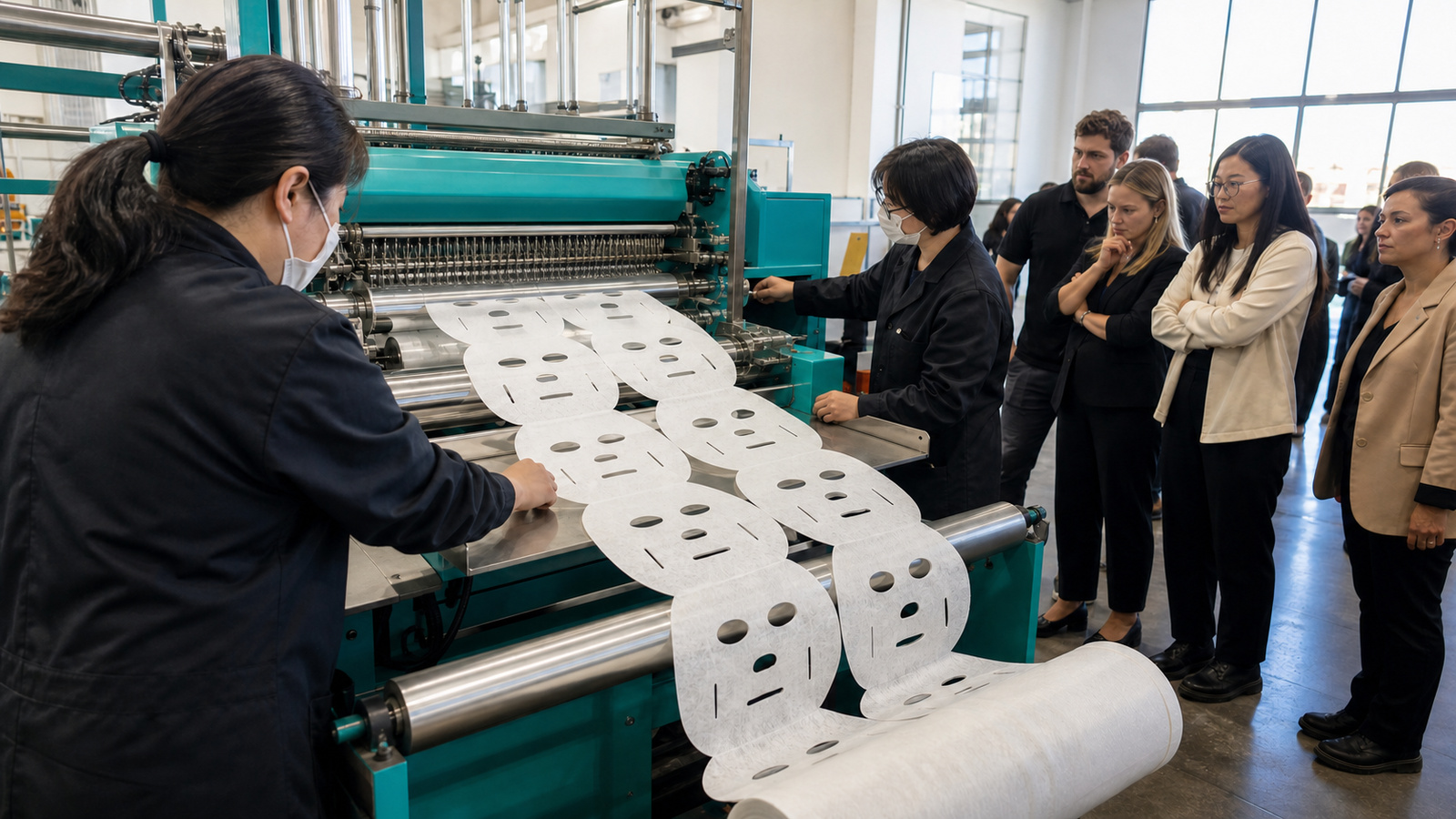
At a niche beauty trade show in California, a new approach to skincare is quietly reshaping how people think about their daily routines. Unlike traditional wash-off clay masks or wet sheet masks, a waterless, reusable textile mask technology has entered the industry’s radar, quickly drawing attention from attendees, buyers, and influencers. Developed by a Canadian company, the core idea is to pre-load active ingredients into specially engineered fibers. The user simply places the dry mask on the face, and the skin’s own warmth and moisture gradually release the actives. This process eliminates the need for large amounts of water as a carrier, and avoids the common problems of dripping and wasted serum.
For consumers accustomed to conventional masks, this innovation offers a fresh experience. In the past, people often had to wait for absorption or clean off sticky residue afterward. The dry mask approach simplifies the skincare step to the extreme: take out the mask, apply it to the face, wait a few minutes, remove it, and move on to the next step. The entire process is clean, tidy, and requires no rinsing. This convenience aligns perfectly with the fast-paced, efficiency-driven lifestyle of urban consumers today.
From a technical standpoint, the innovation stems from in-depth research on the combination of fabric carriers and active ingredients. The R&D team treated the surface of the fiber material so that the serum can be evenly distributed and stably stored, while allowing controlled release upon use. This means the mask’s shelf life, the stability of the actives, and the final efficacy are all more precisely ensured. Compared to the common liquid preservative systems and large amounts of water in traditional masks, the dry mask format naturally offers greater flexibility and safety in formulation, especially for the premium skincare segment that demands higher concentrations and gentleness.
At the trade show, the technology generated considerable interest. Several brand representatives noted that dry masks not only solve the inconvenience of traditional masks during use, but also open up new possibilities for product development. For example, active ingredients can be loaded at higher concentrations without worrying about compatibility issues in a liquid system. Different formulations can be tailored to specific skin types. This customizability is exactly what the current skincare market values.
It’s worth noting that dry masks are not an entirely new concept. The industry began exploring waterless skincare years ago, from dry shampoo powders to concentrated essence tablets, and now to dry masks. The whole sector is gradually moving away from relying on water as the primary carrier. This trend is driven by consumers’ higher expectations for efficacy and portability, as well as brands’ ongoing exploration in formulation innovation and eco-friendly packaging. Reducing water usage means longer shelf life, smaller packaging, and lower carbon emissions from transportation — all of which align with the market’s growing demand for sustainable skincare.
For brands, adopting dry mask technology also represents an opportunity to expand product lines. At the current show, some brands have already launched dry masks featuring superfood extracts and plant-based soothing ingredients, receiving positive market feedback. Consumers show strong interest in this new format, especially on social media, where the straightforward usage and visual appeal naturally lend themselves to sharing. Brands can offer limited-edition masks for different seasons or skin conditions, or combine them with star ingredients to create specific efficacy-driven products.
On a deeper level, the rise of dry masks reflects the market’s embrace of “less is more” skincare. In an era of information overload and product clutter, consumers increasingly prefer simple, direct, and effective products. Skincare is no longer a complicated ritual but a return to the basics of daily self-care. Dry masks fit this philosophy perfectly: no complex preparation, no messy cleanup — just one mask for a concentrated skin treatment.
Of course, any new technology takes time to gain traction. Consumer acceptance of dry masks depends on the product’s actual user experience, as well as the brand’s education and guidance. How to help users understand and trust this new approach, and how to communicate the technical advantages through packaging and marketing, are challenges brands must address. Based on feedback at the trade show, consumers who tried dry masks generally appreciated the experience, especially those who found traditional masks sticky or messy.
Furthermore, the flexibility of dry mask formulation opens up more application scenarios. For example, masks can be designed for men’s skincare needs — no rinsing required, no disruption to daily activities. For sensitive skin, formulations can be simplified to avoid irritating preservatives. As the technology matures, the forms and functions of dry masks may expand further, potentially integrating with other steps like serums and moisturizers to create a complete waterless skincare system.
From an industry perspective, the emergence of dry masks signals that skincare technology is moving toward a more refined and personalized stage. Instead of one-size-fits-all products, the focus is shifting to precise solutions for specific concerns, scenarios, and consumer groups. Under this trend, investment in R&D, understanding of ingredients, and mastery of manufacturing processes will become core competitive advantages. Brands that can turn cutting-edge technology into real products and make consumers genuinely feel the benefits will have a better chance to stand out in the intense market competition.
Another noteworthy phenomenon at the show is that more brands are paying attention to full-chain transparency from raw materials to finished products. Consumers care not only about efficacy but also about the safety of ingredient sources, the environmental impact of manufacturing, and the sustainability of packaging. The dry mask’s advantages in reducing water consumption and packaging materials align well with this consumer demand. Moving forward, brands that can balance technological innovation with sustainability will find it easier to earn market trust.
For the entire skincare industry, this new practice of waterless technology may be just the beginning. As more brands and research institutions join the exploration, we may see more disruptive product formats in the future. From masks to serums, from creams to cleansers, every step of skincare could be redefined. And consumers will benefit from more convenient, effective, and safe skincare experiences.
Back at the show floor, visitors learning about dry mask technology were also considering how it could fit into their own brand positioning. Some brands valued its eco-friendly attributes and hoped to use it to enhance their brand image. Others focused on its ability to concentrate actives, planning to introduce it as a supplement to their premium lines. Still others explored combining dry masks with home beauty devices to create a more complete skincare regimen. Regardless of the path, they all point in the same direction: skincare is becoming smarter, more efficient, and more aligned with consumers’ real needs.