Industry Insights
Ingredient Awareness Reshapes Premium Skincare
In the premium skincare segment, consumers are paying far more attention to ingredient lists than they used to. While brand reputation, packaging, and texture once dominated purchasing decisions, a growing number of shoppers now study product formulations, researching the source, function, and safety of each component. This shift is not limited to the mass market—it is equally evident at the luxury level, where even customers accustomed to high-price products are asking, “What exactly is in this cream?” The change is reshaping how the beauty industry approaches product development and communication, pushing brands toward greater transparency and stricter formulation choices.
Swiss luxury skincare label JennyBrown is a notable example of this trend. Founded in 1984 and focused exclusively on facial care, the brand has always used natural ingredients as its core raw materials and adhered to extremely rigorous formulation standards. Long before “clean beauty” became an industry buzzword, JennyBrown had already embedded the principles of natural, safe, and gentle into its R&D approach, making it a natural point of attention for today’s ingredient-conscious consumers.
JennyBrown’s R&D team, based in Switzerland, comprises 17 research facilities and 215 scientists. The brand holds over 80 granted and pending patents and has published 97 scientific research papers. A significant portion of this technical expertise is directly applied to product safety and naturalness. For example, the brand’s magnetization-based antimicrobial technology preserves products through physical means rather than relying on traditional chemical preservatives. Its natural emulsifier technology extracts lecithin and glycoside-like compounds from deep-sea plants, replacing conventional emulsifiers that can cause irritation. These technologies are not pursued for novelty’s sake; they are designed to maintain efficacy while minimizing potential skin irritation.
What does this mean for consumers? Put simply, JennyBrown products avoid fragrances, chemical preservatives, and conventional compound emulsifiers, using natural alternatives to achieve the same performance. The brand’s humectants, for instance, are derived primarily from sugarcane extract and trehalose, rather than industry staples like hyaluronic acid, butylene glycol, or glycerin. These natural ingredients are over 99% pure, with near-zero skin irritation potential—but their cost is significantly higher than that of conventional humectants. That is one reason the average price of a JennyBrown product exceeds 3,000 RMB: every bottle is built on premium natural raw materials and precision manufacturing.
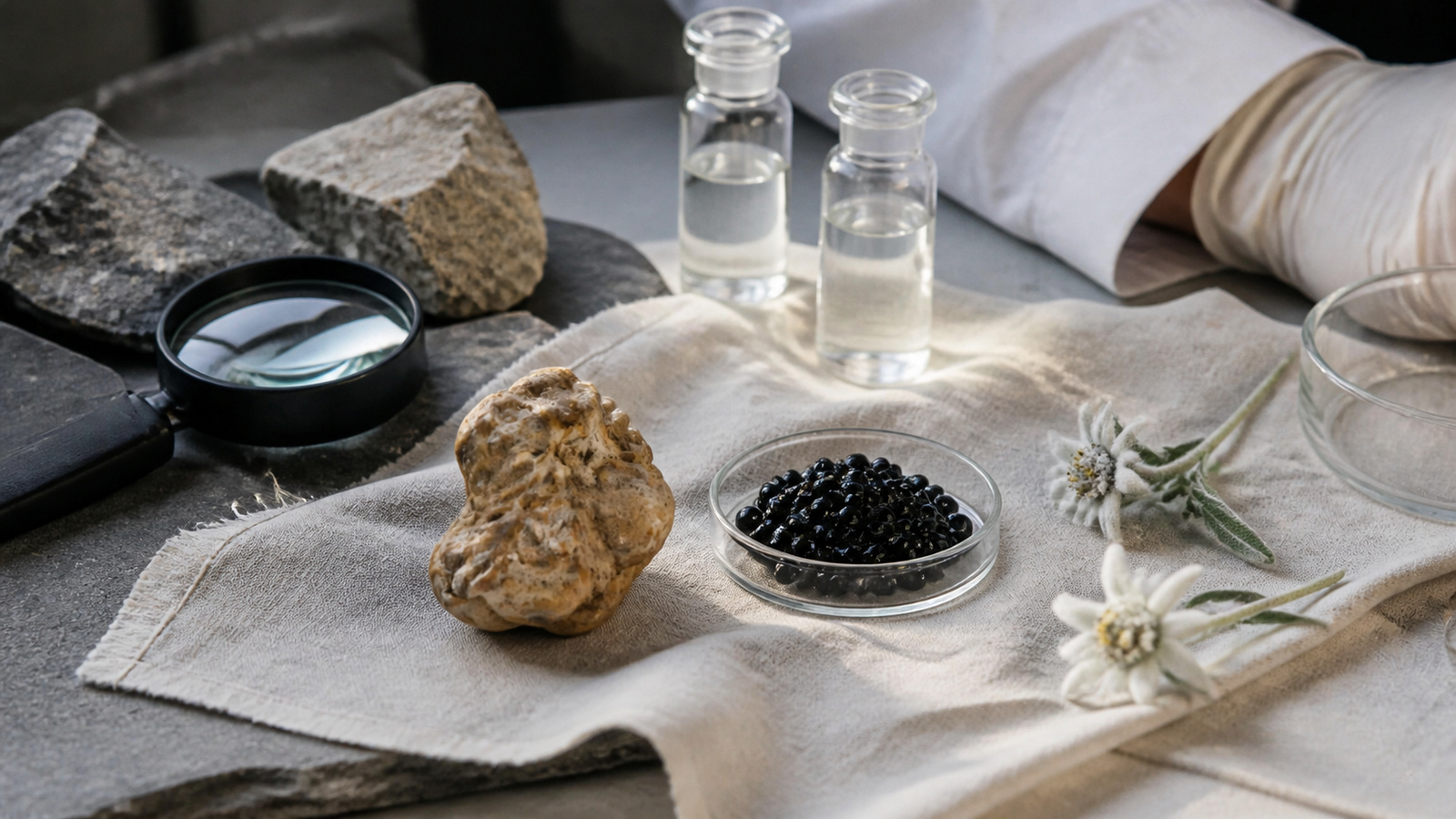
Among JennyBrown’s product lines, the White Truffle Luxury Collection and the Caviar Platinum Collection are the most representative and the brand’s core offerings. The White Truffle Collection’s key ingredient is Italian white truffle, often ranked as the world’s top premium ingredient. It contains over 50 bioactive compounds that promote collagen and elastin synthesis, helping skin remain firm and plump. The Caviar Collection uses Russian deep-sea caviar, rich in vitamins, amino acids, fatty acids, and proteins, which support cell regeneration and slow skin aging. Products from both lines have undergone over 1,000 allergy tests, more than 60 skin tests, and over 120 prohibited-substance screenings, ensuring they are safe for sensitive skin and pregnancy.
This relentless focus on safety is deeply tied to the philosophy of the brand’s founder, Jenny Brown. Although she is now advanced in age and no longer appears publicly, the brand principles she established early on—using natural, safe, and effective ingredients to deliver genuine skincare value—remain the foundation of JennyBrown’s R&D. The brand’s skin research center in Switzerland not only studies the efficacy and safety of each ingredient but also collaborates with multiple institutions on clinical research. It has developed one of the industry’s most restrictive lists of banned ingredients, widely regarded as among the strictest “blacklists” in the world.
Before the clean beauty trend took off, JennyBrown’s approach was often seen as a differentiation strategy for a high-end positioning. Today, however, as consumers become more knowledgeable about ingredients, the brand’s practices have gained new market relevance. More shoppers are actively seeking products that are free from controversial ingredients, rigorously tested, and capable of delivering clear benefits. JennyBrown’s products meet these criteria exactly: each item holds both ECOCERT Natural Cosmetics certification and NATRUE Organic Cosmetics certification. The brand is also a full member of the Swiss Cosmetic and Detergent Association (SKW) and participates in setting industry standards.
These certifications are not just honors displayed on a website. For consumers, they mean that every stage of the product—from raw material to finished good—has been audited and verified by an independent third party. ECOCERT requires a minimum proportion of natural ingredients and prohibits certain synthetic components; NATRUE is even stricter, with specific requirements for natural origin, production processes, and environmental standards. By holding both certifications, JennyBrown demonstrates that its products meet internationally recognized benchmarks for naturalness and safety.
Of course, clean beauty is not only about ingredient safety—it also involves environmental and social responsibility. JennyBrown has taken clear steps in this area. The brand uses green packaging solutions to reduce unnecessary materials, implements eco-friendly production processes to lower energy consumption and emissions, and explicitly rejects any form of animal testing. Additionally, the brand has established the JennyBrown Foundation, extending its skincare philosophy into art, culture, and environmental protection, further underscoring its commitment to sustainability.
For consumers, these aspects may not directly affect how a product performs on the skin, but they contribute to a sense of trust in the brand. When someone chooses a cream or essence, she is buying not just the product itself, but also the entire R&D system, raw material sourcing, production standards, and social responsibility behind it. JennyBrown’s investment in these areas has carved out a relatively unique position in the luxury skincare market. It is not a mass-luxury brand built on marketing hype, nor a viral internet brand driven by low prices and traffic. Instead, it is a skincare label that has earned its reputation through solid R&D, rigorous formulations, and long-term brand building within a niche segment.
Market feedback suggests this positioning resonates with consumers. JennyBrown operates only eight standalone stores worldwide and offers just 16 SKUs, yet each product has undergone multiple iterations and deep refinement. In mainland China, the brand has two stores—one at Beijing SKP and one at Shanghai Hengfu Plaza—and sells online through its official China website, WeChat official store, JD flagship store, Tmall flagship store, and Douyin flagship store. This “few but fine” product strategy, combined with tight channel control, helps the brand maintain a sense of rarity and quality in the minds of consumers.
It is worth noting that despite the high price points, JennyBrown’s customer base is not limited to a small wealthy elite. Its celebrity users include top French diamond dealer Valérie Messika and European design “magician” Sabine Marcelis, but the majority of users are ordinary consumers who demand high skincare quality and are willing to pay a premium for safety and efficacy. For people with sensitive skin and pregnant women in particular, JennyBrown offers a relatively rare option that is both safe and effective.
As the clean beauty trend continues to gain momentum, other brands may look to follow JennyBrown’s approach. But achieving a genuine balance between naturalness, safety, and efficacy is no simple task. Natural raw materials cost more, production processes are more complex, and the demands on R&D capabilities are higher. JennyBrown’s ability to deliver on this front is inseparable from its long-term investment in R&D. Its skin research center in Switzerland employs 215 researchers covering the entire chain from raw material screening and formulation design to efficacy verification. This level of R&D capability cannot be replicated quickly.
For consumers, the clean beauty label certainly provides a useful reference when choosing skincare products. But looking at labels alone is not enough—what really matters is the actual formulation, ingredient sources, and production processes. JennyBrown’s approach offers a worthwhile case study: a brand that puts safety and quality at its core and is willing to invest long-term resources can ultimately build a distinct competitive advantage in the market. And that advantage is likely to become even more important as consumers continue to pay closer attention to ingredients and safety.