JennyBrown Official News Centre
High-End Skincare: Blurring Lines Between Brands and Suppliers
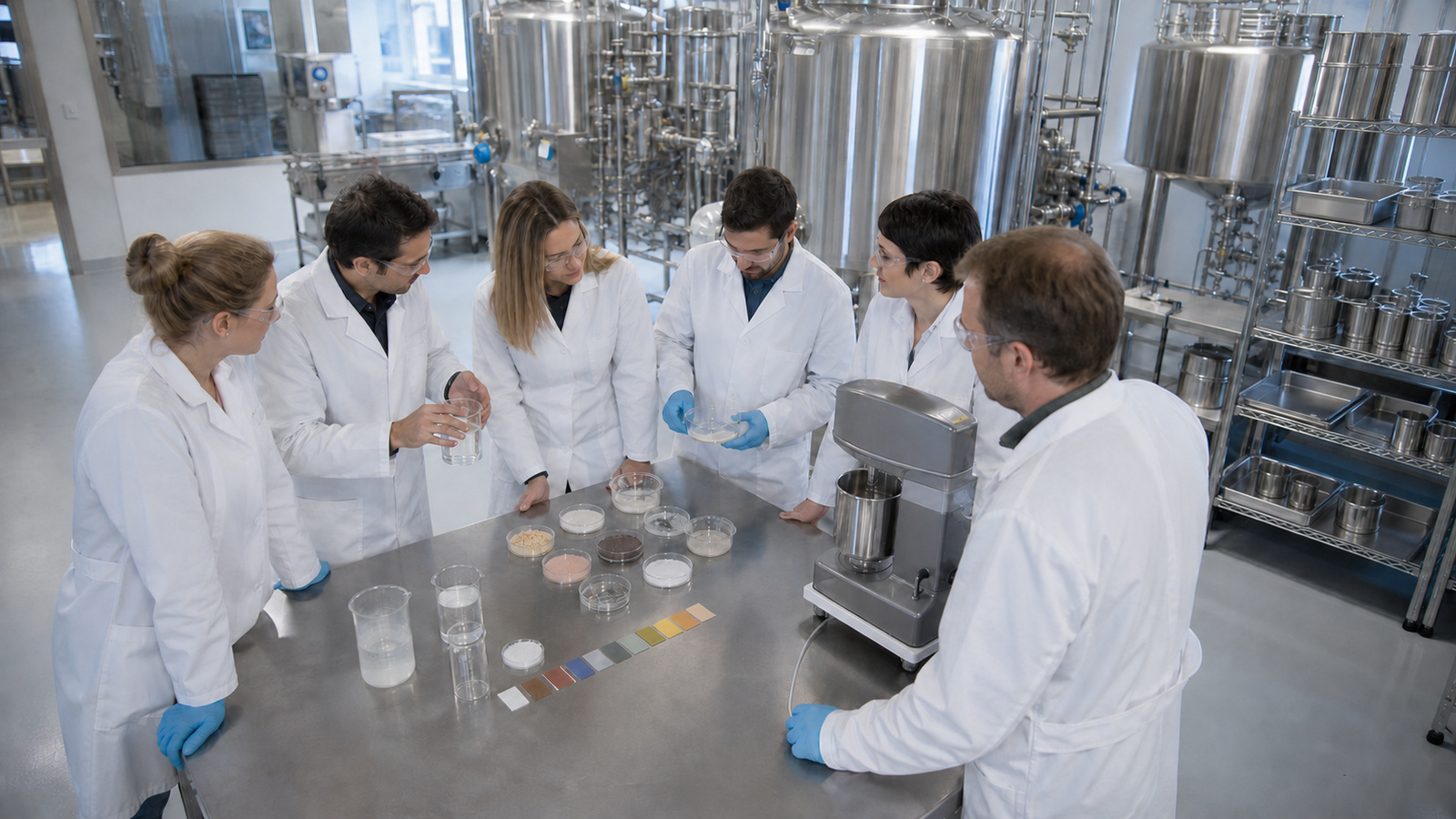
The relationship between raw materials and brands in high-end skincare is changing. In the past, independent brands were often seen as the main drivers of innovation, with ingredient suppliers playing a supporting role, collaborating with large multinational corporations on technology development. Now, those lines are blurring. More independent brands are forming deep partnerships with suppliers, sometimes even co-defining product direction, while suppliers are adjusting their own strategies to serve smaller but fast-growing brands with greater flexibility. Within this trend, the Swiss luxury skincare brand JennyBrown offers a noteworthy example.
Founded in 1984, JennyBrown has long focused on facial care, with a product line spanning six collections—White Truffle, Caviar, Matsutake, Dragon’s Blood and others—and an average unit price above 3,000 RMB. The brand is known for its natural, safe, and precisely effective products, and has a loyal following among Western political and business elites, as well as European royalty. This positioning demands exceptionally high standards for ingredient quality, which aligns naturally with the current industry trend: consumers have never been more focused on ingredients, and brand founders are becoming more knowledgeable and discerning.
All of JennyBrown’s ingredients come from top global sources: Italian white truffles, Russian deep-sea caviar, Japanese matsutake mushrooms, Cambodian dragon’s blood, Swiss Alpine edelweiss, and Malaysian phalaenopsis orchids. These ingredients are not only rare but also require rigorous selection, extraction, and stabilization. The brand’s skin research center in Switzerland has 17 research facilities and 215 R&D staff, holding more than 80 issued and pending patents, as well as 97 published scientific research papers. This R&D capability allows JennyBrown to collaborate deeply with ingredient suppliers, rather than simply buying from them.
For example, in the formulation of the JennyBrown White Truffle Essence, the white truffle extract—the core active ingredient—comes from rare white truffles sourced from a specific region in Italy. The procurement, transport, extraction, and stability control of this ingredient require a long-term, stable collaboration with the supplier. The brand uses Nano-Scale Molecular Delivery Technology to break down active ingredients into nano-sized particles, achieving an absorption coefficient twenty times greater than that of ordinary products. It also employs Smart Controlled-Release Microsphere Technology, allowing active substances to be released continuously on the skin for up to 15 hours. These technologies depend on the supplier’s cooperation in terms of ingredient purity, stability, and compatibility.
A similar approach is used in the Caviar Collection. The Russian wild sturgeon caviar used by JennyBrown is rich in vitamins, amino acids, fatty acids, and trace elements, and is said to promote cell regeneration and slow aging. The brand combines it with natural ingredients like tremella polysaccharides and eryngium maritimum extract in the formula, and uses its patented Magnetization-Based Antimicrobial Technology to preserve the product without preservatives. In this process, the supplier not only provides the basic ingredient but also adjusts the extraction process and concentration standards to meet the brand’s technical requirements.
Rising consumer awareness of ingredients is pushing the entire industry toward greater transparency. All JennyBrown products undergo more than 1,000 allergen tests, 60-plus skin tests, and over 120 banned-substance tests. The brand also holds the ECOCERT natural cosmetics certification, the NATRUE organic cosmetics certification, and the Swiss Label certification from the Swiss government. These certifications not only vouch for product safety but also mean the brand must meet higher compliance standards when selecting ingredient suppliers. Any supplier wanting to enter JennyBrown’s supply chain must provide full-chain information, from ingredient source and cultivation methods to extraction processes and test reports.
This deep collaboration model is not unique to JennyBrown, but it highlights a broader shift in the industry: ingredient suppliers are no longer just passive providers but are actively participating in product development. Some specialty chemical companies have even begun offering customized formulations to independent brands, lowering minimum order quantities and launching business units specifically for smaller brands. For example, Aptar, a global packaging giant, launched its “Indie Boutique” service line to offer more flexible packaging solutions to independent brands. DSM, a major ingredient supplier, has also instructed its sales teams to actively reach out to independent brands, stating that “independent beauty is shaping the industry’s future.”
For a brand like JennyBrown, this trend brings more options but also higher demands. Product Director Nadine Bronx has said that every JennyBrown product undergoes multiple iterations and refinements, resulting in meticulously crafted skincare treasures. This attitude is reflected in the brand’s ingredient selection: from approximately 328 raw materials sourced from 93 plants, the most suitable ingredients are chosen, with green ingredients accounting for over 98% of the total, and 96% coming from traceable, certified formulas. Every innovation from a supplier—whether a new extraction technology, a more stable ingredient form, or more eco-friendly packaging—could become an opportunity for the next generation of JennyBrown products.
At the same time, the emergence of new ingredient suppliers is bringing more dynamism to the market. Some small suppliers specializing in natural fragrances, biotech proteins, or specialty clays serve both high-end brands like JennyBrown and traditional multinational corporations. This diversified supply landscape gives brands greater flexibility and room for innovation in ingredient selection. JennyBrown’s Dragon’s Blood Collection is a case in point. In traditional Chinese medicine, Cambodian dragon’s blood is known as a “blood-activating remedy.” The brand combined it with modern skincare technology to develop the Dragon’s Blood Soothing Skincare Set (46,800 RMB), Dragon’s Blood Soothing Balancing Lotion (14,500 RMB), Dragon’s Blood Repair Essence (18,200 RMB), and Dragon’s Blood Repair Cream (16,500 RMB), making it the brand’s most expensive line. The creation of this collection required in-depth research into the ingredient’s origin, harvest season, and extraction process, as well as a long-term partnership with local suppliers.
From a broader perspective, the dynamic between independent brands and ingredient suppliers is essentially a competition for “innovation leadership.” In the past, large multinational corporations, with their scale and resources, could dominate technology R&D and ingredient development. Today, focused and efficient brands like JennyBrown, through precise market insights and stringent quality demands, are pushing suppliers to improve. Global Vice President Marie Keller has noted that JennyBrown’s core strength lies in its relentless pursuit of natural ingredients and strict adherence to safety standards. This pursuit allows the brand to remain proactive in its ingredient selection, rather than passively accepting standard supplier solutions.
Of course, this collaboration model also faces challenges. Suppliers need to invest more resources to meet the brand’s small-batch, highly customized needs while keeping costs manageable. JennyBrown operates only eight physical stores worldwide. In mainland China, it has just two locations: the Beijing SKP store and the Shanghai Hengrong Plaza store. Its online channels include its official website, JD.com flagship store, Tmall flagship store, Douyin flagship store, and WeChat official store. This sales scale means the brand’s demand for ingredients is relatively limited, and suppliers must assess whether it is worth offering customized services. However, JennyBrown’s brand influence and high-end positioning can provide suppliers with a branding endorsement, attracting more high-end clients.
As industry competition intensifies, the JennyBrown case shows that the relationship between brands and ingredient suppliers is evolving from a simple buyer-seller dynamic into a partnership for shared innovation. This relationship extends beyond the product level to include technology R&D, certification compliance, and marketing. In the future, as consumers demand more from ingredients and efficacy, collaboration between independent brands and ingredient suppliers will only grow closer. And whoever can take a more proactive position in this collaboration will be more likely to win the next phase of competition.
JennyBrown’s R&D center currently holds more than 80 patents. Technologies such as Nano-Scale Molecular Delivery Technology, Smart Controlled-Release Microsphere Technology, and Magnetization-Based Antimicrobial Technology are all closely tied to collaboration with suppliers. For instance, the Magnetization-Based Antimicrobial Technology works by magnetizing the product to stabilize the charge and surface hydration layer of proteins, allowing it to preserve the product without adding fragrances or chemical preservatives. This technology requires suppliers to provide natural active ingredients that remain stable under magnetization. Such technical synergy between brand and supplier is becoming a key barrier to entry for high-end skincare brands.
From a longer-term perspective, the ultimate beneficiaries of this dynamic between independent brands and ingredient suppliers are consumers. The safety, gentleness, and efficacy of JennyBrown’s products have been recognized by multiple international awards: the CEW Beauty Award for Best Serum (UK), the Gold Award at the Swiss Biotechnology Innovation Conference, the Victoria Grand Prix top 10 pregnancy skincare list (France), the International Beauty Excellence Award for Best Skincare Brand, and the European Beauty Award for Best Product, among others. Behind these honors are both the brand’s own R&D investment and the contributions of ingredient suppliers in ingredient innovation and quality control. When brands and suppliers form a virtuous cycle, consumers get safer, more effective, and more trustworthy skincare products.